
Quick Answer: Dried anjeer (fig) gives you roughly 9.8g of fiber, 162mg of calcium, and 680mg of potassium per 100g (USDA). Two to three pieces a day covers most of what the fuss is about. Soak overnight if your stomach is sensitive. No, eating six pieces does not double the benefits.
Anjeer has been in Indian kitchens for generations. Long before anyone called it a superfood, it was just the thing dadi kept by the stove, something soaked in a small katori overnight and eaten first thing in the morning. No measuring, no fuss.
The people who kept that habit going were not wrong. Turns out dried figs are genuinely useful, and the reasons are more interesting than the usual “it’s high in fiber” line that every article leads with. There’s specific stuff here that applies differently to women, to men, to people managing blood sugar, to those who cannot stop craving sweets at 4pm.
So here’s everything actually worth knowing, with none of the generic padding.
What Is Anjeer and What’s Actually In It?
Anjeer is the dried form of Ficus carica, the common fig. Fresh figs are soft and seasonal. Dried anjeer is what most Indian markets carry year-round, and it’s the more nutritionally concentrated form because drying removes water and packs everything else tighter.
Per 100g of dried anjeer (USDA FoodData Central):
| Nutrient | Per 100g |
|---|---|
| Calories | ~249 kcal |
| Carbohydrates | ~63.9g |
| Dietary fiber | ~9.8g |
| Natural sugars | ~48g |
| Calcium | ~162mg |
| Potassium | ~680mg |
| Iron | ~2mg |
| Magnesium | ~68mg |
Before that sugar number scares anyone: a typical serving is 30–40g, not 100g. Two to three pieces. At that portion, you’re getting around 3–4g of fiber, a solid potassium dose, and roughly 75–100 calories. Manageable.
The mineral combination is the real story. Calcium and magnesium together for bones. Potassium managing blood pressure. Iron feeding hemoglobin. Polyphenols and flavonoids layered across all of that. Very few dry fruits have a mineral spread this well-rounded.
How Anjeer Supports Healthy Digestion
One of the most well-known benefits of anjeer is its ability to support healthy digestion. In Ayurveda, anjeer (figs) has long been valued as a Rechana food, meaning it helps promote natural bowel movements. It is also believed to help balance Vata dosha, which is traditionally associated with constipation and sluggish digestion.
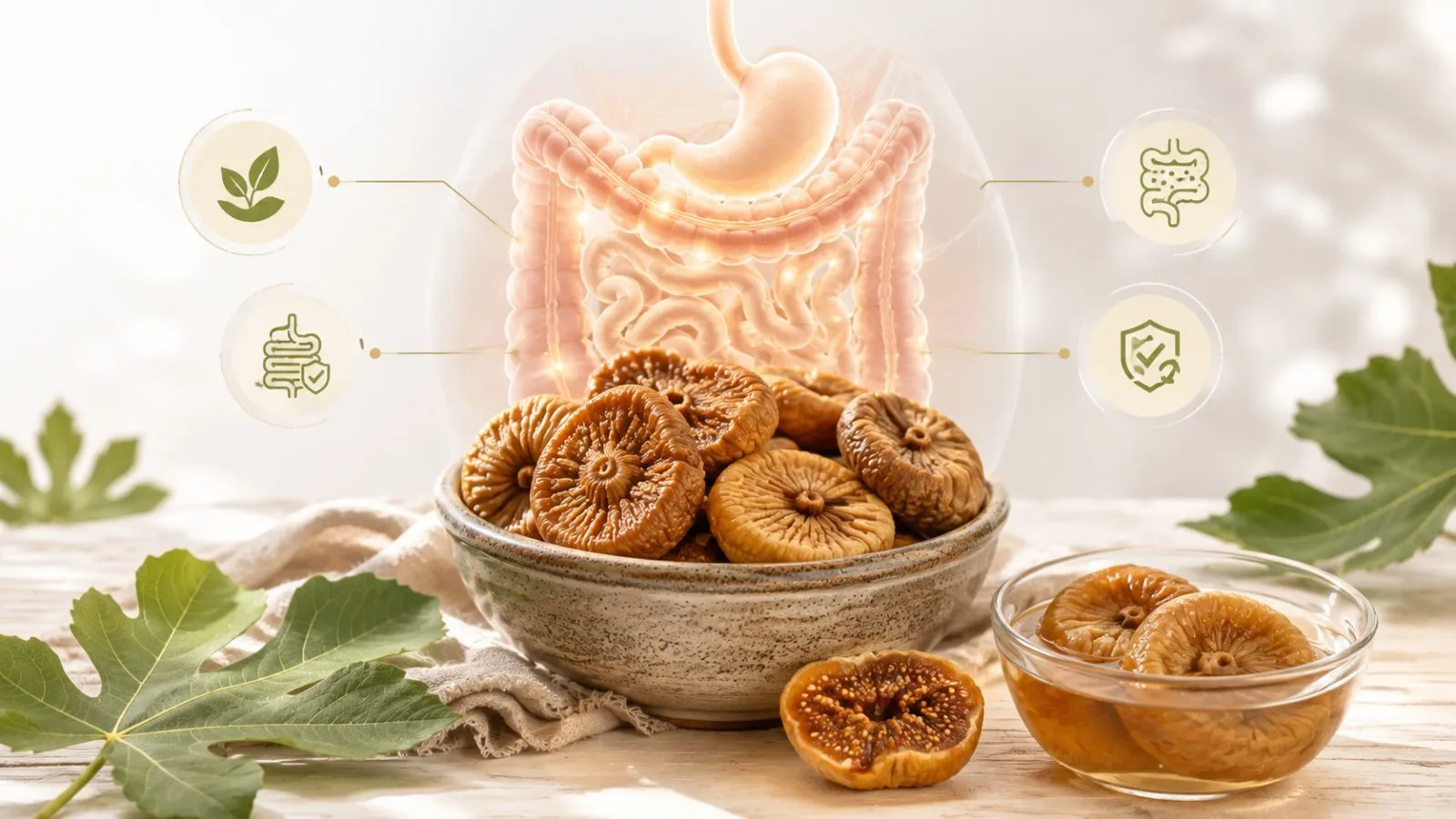
Modern research supports many of these traditional uses. Dried figs are rich in soluble fiber, which acts as a prebiotic by nourishing beneficial gut bacteria. A 2018 randomized controlled trial also found that figs may help improve symptoms in people with constipation-predominant irritable bowel syndrome (IBS), providing scientific support for their digestive benefits.
Many people find that eating two soaked anjeer on an empty stomach each morning helps promote more regular bowel movements and supports overall digestive comfort. While results vary from person to person, making soaked figs part of a balanced diet can be a simple and effective way to increase your daily fiber intake.
For the best results, eat two soaked figs first thing in the morning. If you’re building a broader healthy eating routine, explore the health benefits of dry fruits to compare how anjeer, almonds, raisins, and dates contribute to overall health and wellness.
Anjeer Benefits for Females
This gets its own section because the benefits for women go far beyond general nutrition, and most articles just mention hormones vaguely and move on.
Periods and cramps: Anjeer contains phytoestrogens, plant compounds that interact with the body’s estrogen receptors. A 2020 randomized controlled trial in the Puerto Rico Health Sciences Journal found that women who ate dried figs during menstruation reported meaningfully lower pain severity and shorter pain duration compared to those who didn’t. That’s not a folklore claim. That’s a controlled study.
Menopause: The same phytoestrogen profile that helps with periods also helps during the menopausal transition. A 2015 meta-analysis found significant reduction in hot flush frequency among women consuming phytoestrogen-rich foods regularly. Anjeer is not a hormonal treatment. But eaten consistently, it contributes to the picture.
PCOS: Fiber helps clear excess estrogen from the body. For women managing PCOS, where elevated estrogen and insulin resistance often come together, a fiber-rich, lower-glycemic diet is foundational. Anjeer fits that better than most sweet snacks do.
Pregnancy: Iron to prevent anemia (very common in pregnant women across India), calcium for fetal bone development, folate for neural tube health, and magnesium for muscle function. Up to three pieces daily is generally considered safe, but check with your doctor because pregnancy is not the time for one-size-fits-all.
Skin and hair: Iron carries oxygen to hair follicles. Zinc supports keratin production. Over months of consistent intake, women often notice reduced hair fall. One honest caveat: dried anjeer loses nearly all its Vitamin C during processing. If skin brightness and collagen support are priorities, pair anjeer with something fresh amla, lemon water, any citrus. The antioxidants in dried figs still fight oxidative stress, but don’t expect skin results without also sorting out hydration and Vitamin C intake.
Anjeer Benefits for Males
Men tend to overlook dried figs entirely. That’s worth revisiting.
Zinc in anjeer supports testosterone synthesis and sperm quality directly. It’s not the highest zinc-density food available, but it contributes steadily when eaten daily. Combined with arginine, an amino acid that improves blood circulation, anjeer has a long history in traditional medicine as a reproductive health food for men. The research on this is still limited in human clinical trials, but the nutritional mechanisms are real.
For everyday concerns like energy and performance: the natural glucose and fructose in anjeer provide clean fuel. Two pieces with almonds 30–45 minutes before training is a genuinely good pre-workout option. The fiber slows the glucose release enough that the energy sustains rather than spikes and crashes. Simpler and cheaper than most marketed gym snacks.
On heart health: potassium managing sodium balance, polyphenols reducing arterial inflammation over time. A 2023 review published in Nutrients identified chlorogenic acid and rutin in dried figs as showing measurable activity against oxidative stress markers linked to cardiovascular risk. These are cumulative effects from consistent intake, not something two pieces fixes overnight. But the direction is the right one.
Anjeer for Weight Loss: The Honest Version
Anjeer doesn’t burn fat. Nothing does on its own.
What it does: three pieces of soaked anjeer in the morning and most people find they’re not raiding the kitchen for biscuits by 10am. The fiber fills you. The natural sweetness cuts the craving for processed sugar. That’s the mechanism. Reduced unnecessary snacking, not direct fat loss.
The trap is portion creep. Anjeer is calorie-dense. Five or six pieces thinking more is better adds up to 200+ calories from one snack, and the benefits plateau long before that quantity. Two to three pieces. Replace the afternoon chips or the post-dinner mithai. That’s the practical weight management strategy. If keeping the habit affordable is what makes it stick, the compact everyday variety carries the same fiber and mineral profile as larger grades at a friendlier daily cost.
Soaked vs Dry: What Changes, What Doesn’t
Soaking does not significantly change the nutritional profile. Calcium stays roughly the same. Fiber stays the same. Potassium, iron, magnesium all roughly the same.
What soaking changes is texture and digestibility. The water softens the cellular structure, making anjeer gentler on the stomach. If you eat on an empty stomach, have IBS tendencies, or notice bloating after dry anjeer, soaked is the better choice. Some research also suggests modest improvement in mineral bioavailability from soaking meaning your body may absorb a slightly higher fraction of the calcium and iron. The difference is real but not dramatic.
If none of the above sensitivity issues apply, eating anjeer dry is perfectly fine. One practical note: dried figs come in a range of grades from compact baby-small to extra-large super jumbo, and the grade affects portion feel, sweetness intensity, and how satisfying a single piece is even though the per-gram nutrition tracks similarly across all of them.
To learn more about how soaking affects different nuts and dried fruits, read our guide on soaked dry fruits benefits.
Anjeer and Blood Sugar: The Actual Answer
Dried Anjeer has a Glycemic Index of approximately 61. That’s moderate range. Fresh figs sit around 35–40, which is low. The number that matters more in practice is Glycemic Load, which accounts for the portion you’re actually eating. Glycemic Load per piece of dried anjeer is about 4–5. That’s low.
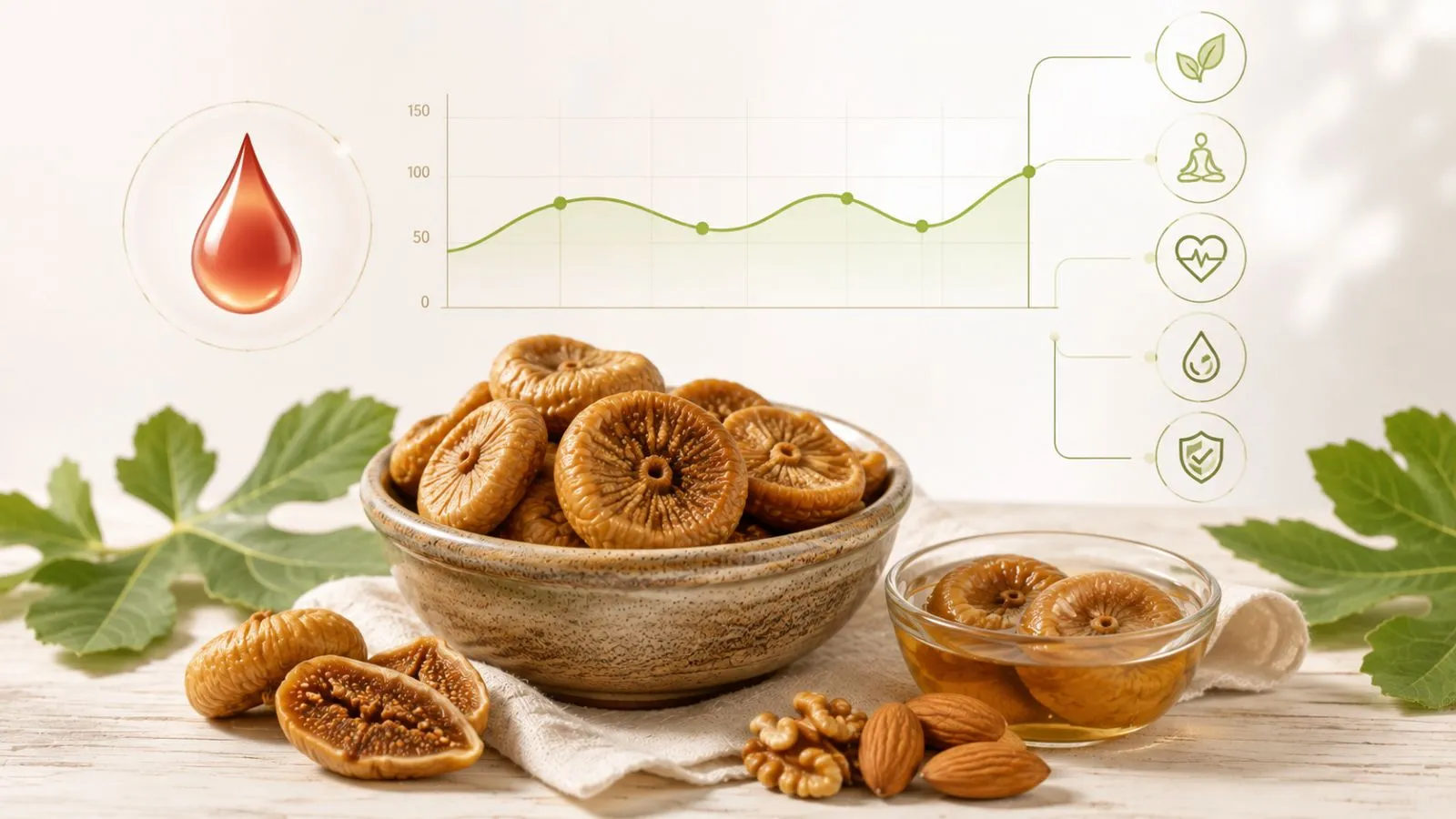
The fiber in anjeer slows glucose absorption, which is why the blood sugar response is smoother than eating the equivalent amount of sugar from a processed source. Still, 100g of dried anjeer has ~48g of natural sugar, and that concentrates quickly in a large serving.
For healthy adults: two to three pieces is a reasonable daily amount. For people with type 2 diabetes or prediabetes: one to two pieces maximum, paired with almonds or walnuts (protein and fat slow glucose absorption further), and ideally not on an empty stomach first thing in the morning when blood sugar is most sensitive. Consult your doctor if you’re on glucose-lowering medication because anjeer may compound the effect.
Anjeer with Milk: Why This Works
Warm anjeer milk is one of those things that has been around Indian homes long enough that people stopped asking why it works. But it does work.
Milk adds protein and additional calcium. Anjeer adds fiber and minerals. The combined calcium intake from both is meaningfully higher than either alone. Warm milk has a mild calming effect from tryptophan, the same amino acid present in small amounts in anjeer itself. The combination is genuinely good for bone health and winding down at night. If you already have a warm milk habit in the evening, adding one soaked anjeer makes it substantively more nutritious.
How Many Anjeer Per Day?
| Who | Recommended daily amount |
|---|---|
| Healthy adults | 2–3 pieces |
| Children (2 years and up) | 1–2 pieces |
| Elderly (sensitive digestion) | 1–2 soaked pieces |
| Pregnant women | Up to 3 pieces, with doctor’s guidance |
| Diabetics or pre-diabetic | 1–2 pieces, paired with protein or fat, under supervision |
Eating more does not increase the benefit. It increases caloric load and sugar intake without adding proportional nutritional value. The 2–3 piece range is where the benefit-to-sugar ratio makes sense.
Best Time to Eat Anjeer
Morning, empty stomach: Most effective for digestion and constipation relief. Soak two pieces the night before, eat first thing.
Pre-workout, 30–45 minutes before training: Two regular pieces or one extra-large grade fig with a handful of almonds or walnuts, 30–45 minutes out. Clean carbohydrate energy, sustained by fat and fiber. Better than most packaged pre-workout snacks, and no ingredient label you need a dictionary to read.
Mid-morning snack: Cuts the 10am hunger before it leads to something worse. Pair with a handful of nuts.
Warm milk at night: Bone health contribution plus mild sleep support. Good long-term habit.
One thing to genuinely avoid: eating anjeer alongside other high-sugar foods. Dates, jaggery, sweetened yogurt, packaged fruit juice. The sugar compounds quickly. Anjeer eaten with a mixed-nut snack or a protein source works much better than anjeer eaten with other sweets.
Who Should Be Careful with Anjeer
Kidney stone history: Dried figs contain oxalates, roughly 100mg per 100g. High oxalate diets over time contribute to calcium oxalate stone formation in susceptible people. If you have a history of stones, limit to one piece daily and increase water intake.
Latex or mulberry allergy: Cross-reactivity with figs is documented. Symptoms can range from mouth tingling to more significant reactions. Discontinue if any reaction occurs.
IBS sufferers: Start with one soaked piece, not two or three. High fiber can initially worsen bloating and gas in a sensitive gut. Introduce slowly and let your digestive system adjust over a week or two.
Anyone on blood thinners: Anjeer contains Vitamin K, which affects blood clotting. Warfarin users should discuss consistent anjeer consumption with their doctor before adding it as a daily habit.
People with uncontrolled diabetes: Not off the table, but definitely needs medical supervision because of the concentrated natural sugar content.
Frequently Asked Questions
Is anjeer hot or cold for the body?
Anjeer is considered a warming (ushna) food in Ayurveda. That’s why it’s traditionally eaten in winters and why warm milk with anjeer is an evening rather than a summer-morning thing. People with a strongly heat-dominant constitution may want to go lighter on it during peak summer.
Can I eat anjeer every day on an empty stomach?
Yes, this is actually the best approach for digestion. Two soaked pieces first thing. Don’t follow immediately with chai or coffee give it at least 20 minutes. That gap makes the most of the fiber’s effect on the gut.
Anjeer vs dates: which is better?
Different profiles for different needs. Dates are higher in iron and quick energy. Anjeer has more fiber, more calcium, and a lower glycemic index. For digestion and bone health, anjeer edges ahead. For anemia and fast energy, dates are stronger. Most people benefit more from having both in rotation than picking one and ignoring the other.
Can Anjeer help with PCOS?
It can be a useful addition to a PCOS-friendly diet. The fiber helps regulate estrogen clearance, and the low glycemic load is better for managing insulin resistance than most sweet alternatives. It is one part of a dietary approach, not a standalone remedy.
Is Anjeer good during pregnancy?
Yes, in moderate amounts. Iron for anemia prevention, calcium for fetal bone development, folate for neural tube health. Up to three pieces daily is what most guidelines suggest, but every pregnancy is different and clearing it with your OB is the right call.
Does soaking Anjeer increase its benefits?
It improves digestibility and possibly mineral absorption slightly. The core nutritional content doesn’t change meaningfully. Soak if you have a sensitive stomach; eat dry if you don’t. Either works.
Choosing Anjeer That’s Worth Eating
Not all dried figs are equal. Color, texture, moisture content, and sourcing all affect what you’re actually getting nutritionally. Commercially processed anjeer sometimes carries added sugar, sulfur dioxide preservatives, or artificial softeners that undercut the point of eating it in the first place.
At Oasis Dry Fruits, anjeer is naturally sourced and dried without additives. No preservatives, no artificial sweeteners. Just the fruit, dried the way it should be with its texture, natural sweetness, and mineral content intact.
Two or three good pieces a day. Consistent. That is the whole strategy. Indian grandmothers figured this out centuries before nutritional science had a framework to explain it. The research is now largely catching up to what was already practice. If anjeer becomes a regular part of the morning routine and you want to build beyond it, the broader selection of naturally dried fruits covers the other pieces of a well-rounded daily habit.