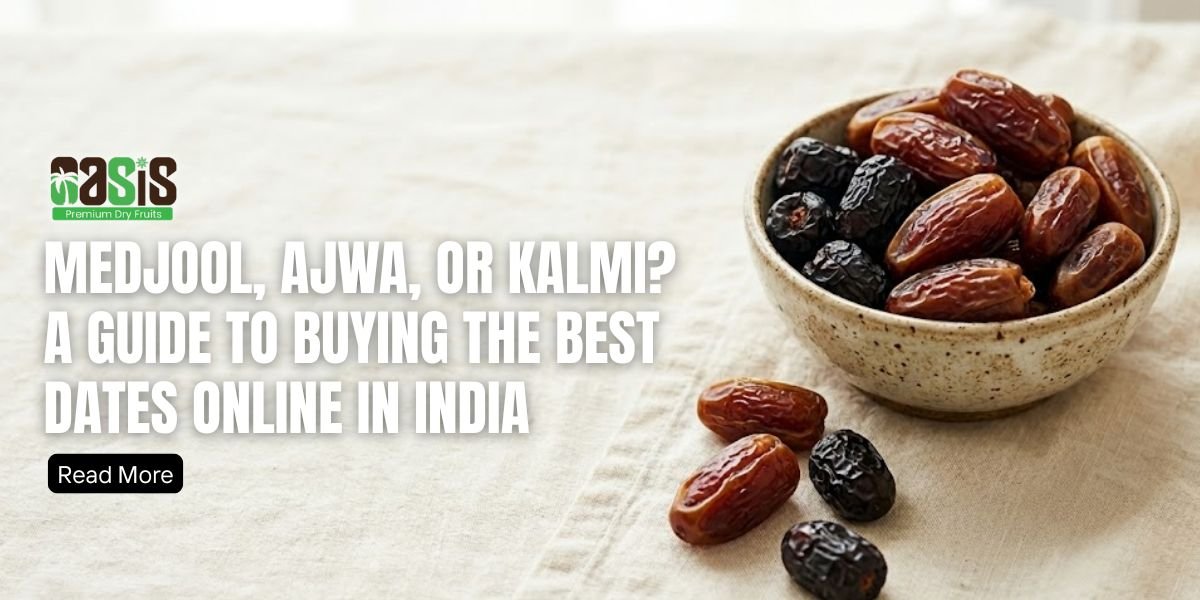
If you are searching for the best dates to buy online in India, three varieties come up in every serious conversation: Medjool, Ajwa, and Kalmi. Each one is different. Different texture, different origin, different price point, and a completely different reason to buy. Getting this distinction right before you order saves you money and disappointment.
Khajoor has always been part of the Indian household. It shows up at Eid without a second thought, sits in the Navratri thaal, and gets pressed into kids’ hands as an after-school snack. But the version most of us grew up with, small, dry, and stuck to a plastic pouch, is not what the premium dates market looks like today.
Here is what you actually need to know before placing an order.
Medjool, Ajwa, and Kalmi: What Actually Sets Them Apart
These three are not interchangeable. Treating them as “just dates” is where most buyers go wrong.
1. Medjool Dates: The King of Dates
Medjool is the largest commercially available date variety. It is soft, caramel-sweet, and almost fudgy when you bite into it. Originally from Morocco, most Medjool dates sold online in India today are sourced from Jordan, Saudi Arabia, or the USA.
Texture: High moisture content. It has a soft pull when bitten, almost like a soft toffee.
Best for: Natural sweet cravings, smoothies, energy balls, and premium gifting.
Buying tip: Always look for Jumbo or Large grade packs. Avoid Select or ungraded options since these tend to be smaller and significantly drier. The color should be a deep, rich brown. A blackened or cracked skin usually means the fruit is over-ripe.
2. Ajwa Khajoor: The Sacred Superfood
Ajwa is in a category of its own. Grown exclusively in Madinah, Saudi Arabia, it carries both religious significance and genuine nutritional weight. It is smaller than Medjool, darker, and matte in appearance.
Texture: Slightly chewy with an earthy, smoky sweetness. Drier than Medjool.
Best for: Health-focused buyers, morning rituals, and Ramzan traditions.
Buying tip: Authentic Ajwa is never glossy. A shiny surface almost always means the fruit has been treated with oil or syrup to improve appearance. On pricing, anything below Rs. 800 per 500g is a serious red flag for authenticity. Real Ajwa costs what it costs because of limited supply and genuine origin controls.
3. Kalmi Dates: The Everyday Workhorse
Kalmi is the underrated one. Long, slender, semi-dry, and mildly sweet with a slight crunch. In many Indian households this is simply “the daily khajoor.”
Texture: Semi-dry and firm. Holds its shape well.
Best for: Daily snacking, dry fruit mixes, and breaking a fast during Ramzan or Navratri.
Buying tip: Look for a uniform dark brown color across the fruit. Pale or yellowish patches usually mean the dates were harvested before they were fully ripe.
How to Spot Quality When Buying Dates Online in India
Product photos on most platforms are misleading. Use this as your quality filter before clicking buy.
| Variety | What to Look For | What to Avoid |
|---|---|---|
| Medjool | Cold storage mentions, Jumbo grading | Surface moisture, broken cold chain signs |
| Ajwa | Madinah origin label, matte skin | Shiny skin, suspiciously low pricing |
| Kalmi | Vacuum-sealed pack, dark brown color | Open boxes, sticky or wet texture |
Storage: Keeping Your Dates Fresh After Delivery
Medjool is the most sensitive of the three. Once opened, move them into an airtight container and refrigerate immediately. They stay soft and fudgy for three to four weeks in the fridge.
Ajwa and Kalmi are more forgiving. A cool dry cupboard works for up to two months. Refrigeration stretches that to nearly five months without any loss in quality.
Beyond Snacking: Using Dates in the Indian Kitchen
Natural sweetener: Medjool blends into a smooth paste, making it perfect for halwa, kheer, or no-bake energy balls. You can replace refined sugar entirely in most of these recipes.
Pre-workout fuel: Two or three Kalmi dates give you enough natural glucose and fiber to sustain energy through a workout without a crash afterward.
Morning ritual: Many South Asian households follow the practice of eating three Ajwa dates on an empty stomach. It is rooted in tradition and backed by the fruit’s high antioxidant and fiber content.
Frequently Asked Questions
Which date variety is best for weight loss and diabetics?
Ajwa and Kalmi dates are better suited for weight loss and people managing blood sugar than Medjool. Both are semi-dry with a lower moisture-to-fiber ratio, which means slower sugar release compared to the soft, high-moisture Medjool. That said, dates are calorie-dense regardless of variety. Two to three pieces a day is the sensible limit for anyone watching their weight or blood sugar levels.
Why are Medjool dates so much more expensive than regular dates?
Medjool dates are expensive because growing them is genuinely labor-intensive. Each cluster needs to be manually thinned during growth to allow the remaining fruits to develop into their large size. Harvesting is done by hand, one fruit at a time. On top of that, Medjool’s high moisture content makes it fragile during transport, requiring strict cold chain logistics from the farm all the way to your door in India. You are paying for size, freshness control, and handling, not just a brand premium.
Is the white powder on my dates mold or sugar?
In almost every case it is sugar crystallization, not mold. When dates are stored in cooler temperatures or simply age past their peak, the natural fruit sugars migrate to the surface and form white spots or a light dusty coating. The simple test: rub the white patch between your fingers or warm the date slightly. Sugar crystals dissolve instantly. Mold will look fuzzy, will not rub off cleanly, and will have a distinctly off smell. If it smells fine and dissolves with warmth, eat it without worry.
Should I wash dates before eating them?
Yes, always. Even premium Medjool and Ajwa dates are sun-dried in open environments before packing. A quick rinse under cold water takes ten seconds and removes any surface dust or residue from handling and transit. The only thing to watch: pat them completely dry before storing if you are not eating them immediately. Leftover surface moisture inside a sealed container will accelerate spoilage faster than almost anything else.
Can I use Kalmi or Ajwa as a substitute for Medjool in baking?
You can, but the result will be different. Medjool is the preferred baking date because its high moisture content lets it blend into a completely smooth paste, which is what gives raw brownies and energy balls their fudgy texture. Kalmi and Ajwa are drier, so if you substitute them, soak both varieties in warm water for ten minutes first. This softens the skin enough to blend properly. Skip the soaking step and your dessert will have a slightly fibrous, grainy texture instead of the smooth consistency you are going for.
The Bottom Line
The best date is not the most expensive one. It is the one that fits what you actually need. Medjool for indulgence and gifting. Ajwa for health and tradition. Kalmi for everyday use without overthinking it.
When buying online, prioritize brands that are upfront about origin, grading, and sourcing. Oasis Dry Fruits carries all three varieties with clear origin labeling, no preservatives, and graded sizing so you know exactly what is arriving at your door.