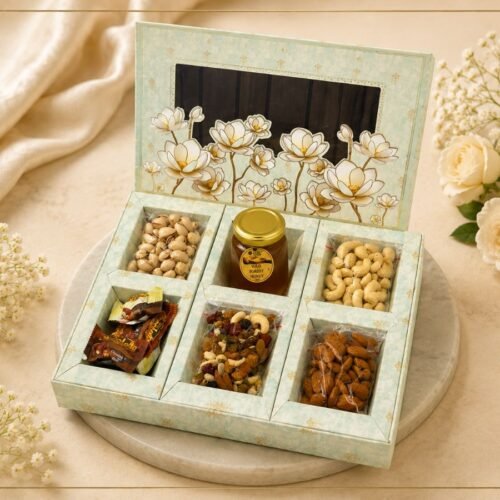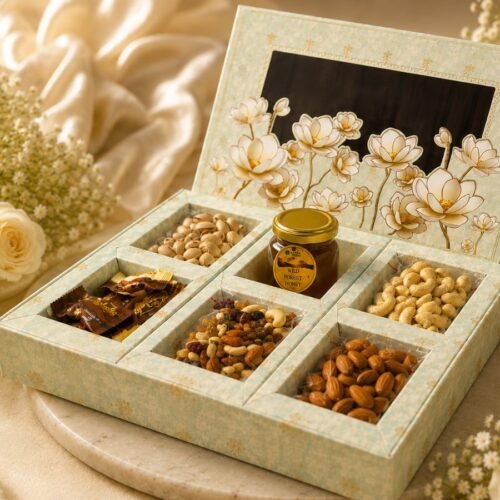
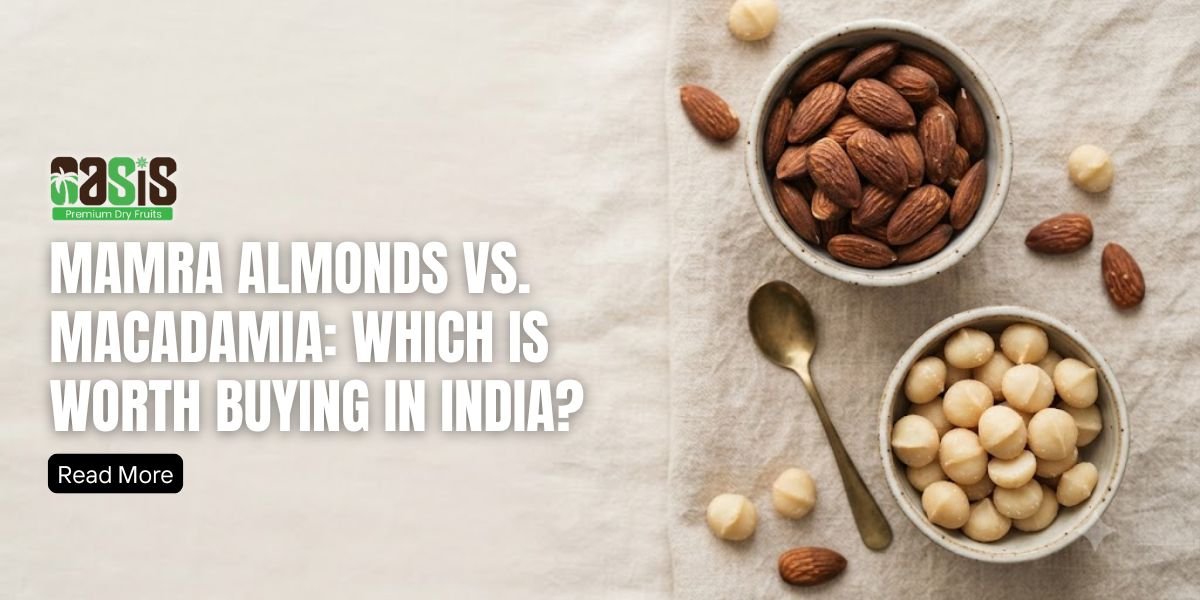
Walk into any dry fruits shop in India, and you already know what you want. Badam, Kaju, Kishmish, it’s muscle memory at this point. But the moment you shift to buying nuts online, the options multiply fast, the prices scatter all over the place, and you end up spending more time comparing than actually buying. If you’ve been searching for the top nuts to purchase from the web in India and you keep coming across two options that seem distinct from one another, Iranian Mamra almonds and macadamia, then you’re not alone. They’re both mentioned often, not due to being alike, but rather because they’re both at the top of the shelves. One belongs in your daily kitchen routine. The other is a quieter kind of indulgence. Knowing which is which saves you from a purchase you’ll second-guess.
Mamra Badam: The Original Premium Almond
Most people who know Badam think they know Mamra Badam. They don’t. The California almond that floods Indian supermarkets is a completely different product, bigger, flatter, processed, and largely stripped of the oils that make an almond worth eating. Mamra Badam is smaller, concave, and irregular in shape. It looks almost rustic next to a supermarket almond. But when you bite into it, there’s a richness that hits you right away, oily, nutty, and genuinely sweet in a way that isn’t manufactured.
What Actually Makes It Different
The key difference with Mamra is the fat content. Iranian Mamra almonds are naturally higher in oil than any other almond variety on the market. That oil is where the nutrition lives. The nut is hand-harvested and sun-dried rather than industrially processed, which means the skin stays intact and the oils stay inside the kernel. It’s not a marketing distinction. You can taste it.
My Experience with Mamra Badam
I’ve been using Mamra Badam regularly for a while now, and honestly, once you switch, the regular supermarket almond starts tasting like cardboard. I soak them overnight, peel them in the morning, and have them with a glass of warm milk. The peeling is easy; the skin comes off cleanly after soaking, no struggle. And the taste after soaking is noticeably smoother than eating them raw. If you’re going to buy Badam online in India, Mamra is the only variety I’d actually recommend for daily use.
Macadamia Nuts: What You’re Actually Paying For
Macadamia is not a daily nut. It’s not priced like one either. But if you’re going to spend on it, it helps to understand what the money is going toward.
Why Macadamia Is Expensive
- The trees take seven to ten years before they produce a harvestable crop
- The shell is one of the hardest of any nut and must be cracked mechanically
- Most macadamia nuts India consumers buy are still imported from Australia or South Africa
- The yield per tree is low compared to almonds or cashews
The price structure is real, and it’s not going to change. What you will receive is a nut that’s abundant in monounsaturated fats. similar to the fat composition that makes olive oil a good choice for making use. It’s naturally low on carbohydrates, which is the reason it’s become a common food for those who follow keto diets or low-carb diets.
What to Check Before You Buy
When buying premium dry fruits online, especially macadamia, a few things matter more than price:
- Whole kernels only. Broken pieces mean more surface exposure, which means faster rancidity.
- Smell it when it arrives. Good macadamia smells faintly buttery and clean. Any sharpness means the batch has turned.
- Airtight, sealed packaging. These nuts are sensitive to Indian heat and humidity in a way that Badam isn’t.
- Check the origin label. Australian macadamia is considered benchmark quality. South Africa is close. Unlabelled origin is a skip.
Got it. Sirf woh do replacement sections likh raha hoon, baaki blog same rahega. Drop these in where the competitor section was.
How to Spot Good Nuts Before You Click Buy
This is where most people go wrong. They sort by price, pick the middle option, and hope for the best. With both Mamra Badam and macadamia, that approach will disappoint you at least half the time.
What to Look for in Mamra Badam
When you buy Badam online in India, the product images won’t tell you much. What actually matters is what the seller tells you or doesn’t.
- Origin clarity. Iranian Mamra and Kashmiri Mamra are both real, both good, but priced differently. If a seller lists “Mamra Badam” with zero mention of origin, that’s a red flag.
- No polish, no shine. Authentic Mamra has a natural matte look with a slight sheen from its own oils. Overly shiny almonds have often been processed or coated.
- Concave shape. Mamra is naturally curved and irregular. If every almond in the pack looks identical and flat, it’s probably not Mamra.
- Sell-through speed matters. A seller moving high volumes of Mamra has fresher stock. Slow-moving sellers often have almonds sitting in storage far too long.
What to Look for in Macadamia
Macadamia is more sensitive than most people realise, especially in Indian heat.
- Whole kernels only. Broken pieces go rancid faster. A good seller won’t be offloading crumbles.
- Vacuum sealed or nitrogen-flushed packaging. Exposure to air is what kills macadamia the fastest.
- Australian or South African origin. These are the benchmark growing regions. Unlabelled origin means you’re guessing.
- Smell on arrival. Clean and faintly buttery is what you want. Anything sharp or sour, return it.
Storing These Nuts the Right Way
Buying quality is only half the job. How you store them at home determines whether they stay good for two weeks or two months.
Mamra Badam Storage
Mamra has a higher natural oil content than regular almonds, which means it’s slightly more prone to going stale if left in the open. An airtight container in a cool, dry spot works well for up to three months. If you live somewhere with a hot, humid summer most of India, basically move them to the fridge after opening. The texture stays firm, the oils don’t turn, and the soaking results are noticeably better when the almond is fresh.
One thing worth knowing: Mamra Badam absorbs smells from strong-scented foods nearby. Keep the container away from spices or anything pungent.
Macadamia Storage
Macadamia is the most storage-sensitive premium nut you can buy. The natural oils are delicate. Once the pack is open, move them immediately to an airtight container and refrigerate. They’ll hold for up to six months in the fridge, closer to a year in the freezer, without losing texture or taste.
Room temperature storage is fine for a week or two if your home stays cool. Anything longer in Indian summer conditions and you’re pushing your luck. The moment you notice any sharpness in the smell, don’t eat them. A rancid macadamia tastes genuinely unpleasant, and the oils aren’t good for you at that stage.
A small habit that helps buy in smaller quantities more frequently rather than one large pack that sits around. With macadamia, especially, freshness at the time you eat it matters far more than the price per gram.
How These Two Nuts Fit Into a Real Kitchen
Mamra Badam has been in the Indian kitchen long enough that nobody thinks of it as a choice anymore. Soaked Badam with warm milk is a morning habit in Punjabi and Rajasthani homes. It goes into sheer khurma at Eid, into halwa at Diwali, into the steel dabba on the top shelf that every household has. You already know what to do with it the moment it arrives.
Macadamia is still finding its footing in Indian kitchens. Bakers are folding it into cookies and brittle. People on structured diets mix it with Kaju and Pista for a trail mix. Some households just keep a small jar around for an evening snack that’s actually filling enough to work. No ritual required. No recipe needed. Just eat a few and move on.
If you’re building a proper dry fruits shelf, for daily use, for gifting, for both, you probably want both of these: different roles, different occasions.
Conclusion
These two nuts don’t really compete with each other. Mamra Badam is a daily investment that compounds over time. Macadamia is an occasional one that earns its place in specific routines. When you’re looking for the best nuts to buy online in India, the answer usually comes down to what you’ll actually finish, not what looks most impressive in the cart. Start with smaller quantities. See what gets used. That feedback loop is more useful than any comparison article.
Oasis Dry Fruits carries both, sourced with attention to freshness and packed to stay that way. Whatever you order, the quality at the time of delivery matters more than most people account for.
FAQ’S
Q1: What is the difference between Mamra Badam and regular California almonds?
Mamra Badam is a smaller, oil-rich almond variety grown in Iran and parts of Kashmir. It has a naturally concave shape, higher fat content, and a noticeably richer flavour compared to California almonds. California almonds are larger, flatter, and industrially processed, which reduces their natural oil content. For daily health use and soaking, Mamra is the superior choice.
Q2: How long should you soak Mamra Badam before eating?
Soak Mamra Badam for 6 to 8 hours, or overnight. This softens the skin enough to peel cleanly and makes the nutrients easier to absorb. After soaking, the texture becomes smoother and the natural sweetness of the nut comes through more clearly than eating it raw.
Q3: Are macadamia nuts good for people following a keto diet in India?
Yes. Macadamia nuts have one of the lowest carbohydrate counts of any nut, making them a natural fit for keto and low-carb diets. They are high in monounsaturated fats, similar to the fat profile in olive oil, which supports satiety without spiking blood sugar. For keto followers in India, macadamia is one of the few genuinely low-carb premium nut options available.
Q4: Which is better value when buying nuts online in India: Mamra Badam or macadamia?
For daily use and overall value, Mamra Badam wins. It’s more affordable, widely available, and suited to Indian kitchen routines including soaking, cooking, and everyday snacking. Macadamia is significantly more expensive due to import costs and low crop yield, and is better treated as an occasional or specialty purchase rather than a daily one.
Q5: How do you store macadamia nuts after opening the pack in India’s climate?
Once opened, transfer macadamia nuts immediately to an airtight container and refrigerate. In India’s heat and humidity, room temperature storage beyond one to two weeks risks the natural oils turning rancid. Refrigerated, they stay fresh for up to six months. Frozen, they can last close to a year. If the nuts smell sharp or sour when you open the container, discard them. A good macadamia should smell clean and faintly buttery.