The benefits of macadamia nuts come mainly from their fat profile: about three-quarters of a macadamia’s weight is fat, and most of that fat is monounsaturated. Macadamias are among the most calorie-dense tree nuts, at 718 kcal per 100 g, and they are a strong source of manganese, thiamin and copper. A 2008 controlled feeding study at Penn State found that a diet including 42.5 g of macadamia nuts a day lowered total cholesterol by 9.4% and LDL cholesterol by 8.9% in adults with mildly raised cholesterol. The study was small and industry-funded, so macadamia nuts suit a heart-conscious diet in measured portions and are not a treatment.
What Are Macadamia Nuts?
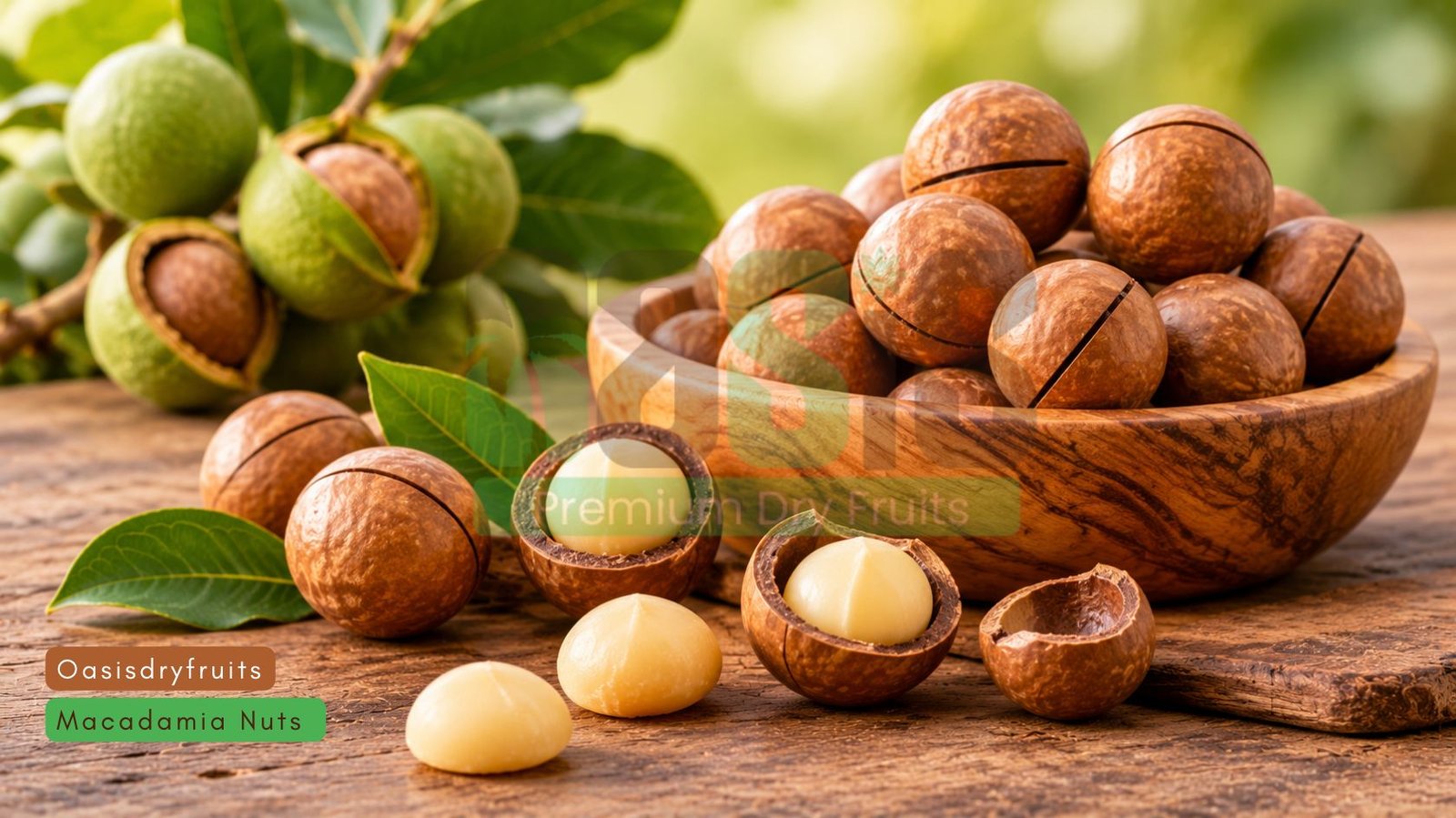
Macadamia nuts are the seeds of the macadamia tree, an evergreen native to Australia. Each nut has a very hard brown shell around a cream-coloured kernel with a buttery taste and a soft crunch. Oasis Dry Fruits sells macadamias in two forms: shelled macadamia kernels and in-shell Macadamia Nuts With Shell (Vanilla).
Macadamias differ from most nuts in their fat profile. They are higher in monounsaturated fat, the type of fat found in olive oil, and lower in protein and polyunsaturated fat than almonds, walnuts or pistachios.
Macadamia Nuts Nutrition Facts
A 28 g serving of macadamia nuts provides about 200 kcal and 21 g of fat, most of it monounsaturated. The table below uses USDA FoodData Central values for raw macadamia nuts, rounded, with the 28 g column calculated from the per-100 g figures.
| Nutrient | Per 100 g | Per 28 g serving |
|---|---|---|
| Energy | 718 kcal | about 200 kcal |
| Total fat | 75.8 g | 21.2 g |
| Monounsaturated fat | 58.9 g | 16.5 g |
| Saturated fat | 12.1 g | 3.4 g |
| Protein | 7.9 g | 2.2 g |
| Carbohydrate | 13.8 g | 3.9 g |
| Dietary fibre | 8.6 g | 2.4 g |
| Manganese | 4.1 mg | 1.2 mg |
| Thiamin (vitamin B1) | 1.2 mg | 0.33 mg |
| Copper | 0.76 mg | 0.21 mg |
Source: USDA FoodData Central, raw macadamia nuts (FDC ID 170178). Per-serving values are calculated from the per-100 g figures.
Three nutrients stand out besides fat. A 28 g serving supplies about half the daily value for manganese, about a quarter of the daily value for thiamin and about a quarter for copper. Protein is low: at 2.2 g per serving, macadamias provide just over a third of the protein in the same weight of almonds, so they are an energy and fat food rather than a protein source.
What Is Palmitoleic Acid in Macadamia Nuts?
Palmitoleic acid is an omega-7 monounsaturated fatty acid that is uncommon in other nuts but present in macadamia fat in meaningful amounts. Analyses of macadamia samples report it at roughly 18 to 36% of total fatty acids, depending on the sample. Its effects in people are still being studied, and no trial has shown a health benefit from the palmitoleic acid in macadamias specifically.
What Are the Health Benefits of Macadamia Nuts?
The best-supported benefit of macadamia nuts is a modest drop in cholesterol when they replace foods high in saturated fat. The main evidence is a randomised crossover trial by Griel and colleagues, published in the Journal of Nutrition in 2008. Twenty-five adults with mildly high cholesterol ate all their meals from the research kitchen for two five-week periods: one on a heart-healthy diet that included 42.5 g of macadamia nuts a day, and one on an average American diet. Compared with the average American diet, the macadamia diet lowered total cholesterol by 9.4% and LDL cholesterol by 8.9%.
Three limits apply. The trial was small. The macadamia diet also contained about half the saturated fat of the comparison diet (7% of energy against 13%), so the result reflects the whole change in diet and not macadamias alone. And the study was supported by The Hershey Company, which then owned Mauna Loa Macadamia, with partial support from the US National Institutes of Health.
What the trial shows is narrower than many benefit lists suggest. Replacing foods high in saturated fat with macadamias lowered LDL cholesterol over five weeks. The trial did not measure heart attacks, strokes or longer-term outcomes, and it did not compare macadamias with other nuts.
In 2017, the US Food and Drug Administration allowed a qualified health claim for macadamia nuts and reduced risk of coronary heart disease, in response to a petition from Royal Hawaiian Macadamia Nut, Inc. The FDA described the evidence as supportive but not conclusive, and the claim covers 1.5 ounces (about 42 g) a day eaten as part of a diet low in saturated fat and cholesterol, without increasing saturated fat or calorie intake. Macadamias had been left out of the FDA’s earlier general nut claim because they contain about 6 g of saturated fat per 50 g, above that claim’s 4 g limit.
What About Weight, Blood Sugar and Gut Health?
Claims that macadamias help with weight loss, blood sugar or gut health rest on research on nuts in general, animal studies or very small trials, not on strong evidence for macadamias. Macadamias are low in carbohydrate, at about 3.9 g per 28 g serving, of which 2.4 g is fibre, which is why they appear in low-carb and keto diets. Their calorie density is the main risk: macadamias can contribute to weight gain when they are added to usual meals, because a daily 28 g serving on top of normal food adds about 200 kcal a day, or roughly 1,400 kcal a week.
How Many Macadamia Nuts Should You Eat a Day?
A common portion is about 28 g, around 10 to 12 kernels, which provides about 200 kcal. The Penn State study and the FDA claim both use about 42 g a day, roughly 305 kcal, eaten in place of other foods rather than in addition to them.
If you are watching your weight, measure a portion instead of eating from the pack. People with a tree nut allergy should avoid macadamia nuts.
How Do Macadamia Nuts Compare With Almonds?
Almonds provide more protein, fibre and vitamin E for fewer calories, while macadamias provide more monounsaturated fat and manganese. The table below compares a 28 g serving of each, using USDA values for raw nuts and Oasis Dry Fruits prices listed in November 2026.
| Per 28 g | Macadamia | Almond |
|---|---|---|
| Energy | about 200 kcal | about 162 kcal |
| Protein | 2.2 g | 5.9 g |
| Dietary fibre | 2.4 g | 3.5 g |
| Total fat | 21.2 g | 14.0 g |
| Saturated fat | 3.4 g | 1.1 g |
| Vitamin E | 0.15 mg | 7.2 mg |
| Manganese | 1.2 mg | 0.6 mg |
| Oasis price, 250 g | ₹900 (kernels) | ₹400 (California) |
For everyday protein and vitamin E, almonds give more nutrition for less than half the price. Macadamias suit people who want their taste, texture and monounsaturated fat as an occasional or premium nut. The guide to the health benefits of almonds covers the evidence for almonds, and the Mamra almonds vs macadamia comparison explains why macadamias cost more than most nuts.
How Should You Store and Buy Macadamia Nuts?
Store macadamia nuts in an airtight container away from heat, light and humidity, because their high fat content makes them prone to going rancid. In hot weather, or for storage beyond a few weeks, keep the sealed container in the fridge, and use the freezer for longer storage. Let refrigerated nuts reach room temperature before opening the container, so moisture does not form on them. In-shell macadamias generally keep longer than kernels because the shell limits exposure to air. Our guide to storing dry fruits compares refrigeration, pantry and freezer storage.
Oasis Dry Fruits sells two macadamia options. Prices are as listed on the Oasis Dry Fruits website in November 2026.
| Product | 250 g | 500 g |
|---|---|---|
| Macadamia Kernel | ₹900 | ₹1,775 |
| Macadamia Nuts With Shell (Vanilla) | ₹825 | ₹1,625 |
The in-shell pack weight includes the shell, so a 250 g in-shell pack contains fewer grams of kernel than a 250 g kernel pack. For other options, see the full nuts collection.
FAQs About Macadamia Nuts
Are macadamia nuts safe for dogs?
No. The ASPCA lists macadamia nuts as toxic to dogs. Signs include weakness, especially in the back legs, vomiting, tremors and depression, and the toxic substance has not been identified. Contact a vet if a dog eats macadamia nuts.
Is the fat in macadamia nuts bad for you?
No. Most of the fat in macadamia nuts is monounsaturated: about 59 g of the 76 g of fat in 100 g, or roughly 78%. Macadamias do contain more saturated fat than most nuts, about 3.4 g per 28 g serving, so portion size matters. The cholesterol benefit in the Penn State trial appeared when macadamias replaced foods higher in saturated fat, not when they were added to the diet.
Can you eat macadamia nuts every day?
Yes. Most healthy adults can eat a 28 g portion of macadamia nuts every day as part of a balanced diet, counting the roughly 200 kcal within their daily intake. People with a tree nut allergy should avoid them.
Are macadamia nuts keto-friendly?
Macadamia nuts fit most keto and low-carb diets. A 28 g serving has about 3.9 g of carbohydrate, of which 2.4 g is fibre, leaving about 1.5 g of net carbohydrate. The calories still count, at about 200 kcal per serving.
Are raw or roasted macadamia nuts healthier?
Raw and dry-roasted macadamia nuts are nutritionally very similar; USDA lists both at about 718 kcal per 100 g. Choose unsalted versions, because salted and flavoured macadamias add sodium and sometimes oil.
Do macadamia nuts contain cholesterol?
No. Macadamia nuts, like all plant foods, contain no cholesterol. Their effect on blood cholesterol depends on what they replace in the diet, and they contain more saturated fat than most other nuts.
Are macadamia nuts a tree nut allergen?
Yes. Macadamia nuts are tree nuts, and people with a tree nut allergy should avoid them unless an allergist advises otherwise.