

Description
Dried rose petals sit at the intersection of three completely separate traditions in India, the Ayurvedic apothecary, the perfumer’s atelier, and the kitchen, without fully belonging to any one of them and without any of them wanting to give them up. The same gulab patti that goes into a sharbat on a summer afternoon appears in a face pack the following morning and as a garnish on biryani the evening after that. This versatility is not accidental. Rose petals carry compounds that work across these applications through genuine chemistry rather than through romantic association, and the difference between fresh, properly dried petals with volatile oils intact and the faded, dusty alternative sitting in most spice shops is the difference between an ingredient that does something and one that merely looks like it should. Oasis Dry Fruits sources premium dried rose petals because floral ingredients with this range of genuine applications deserve handling that keeps the active compounds present rather than decorative.
What These Actually Do
Antioxidant Concentration From Polyphenols Specific to Rosa
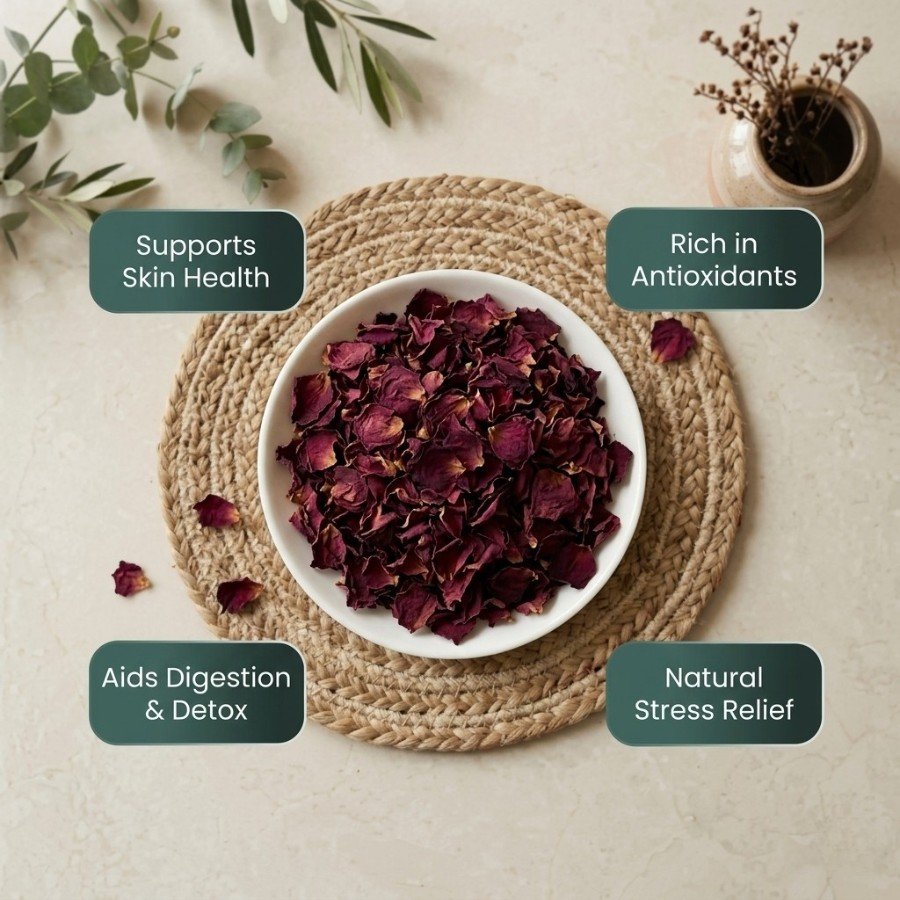
Antioxidant rose petals carry gallic acid, quercetin, and kaempferol in concentrations that reduce cellular oxidative damage through flavonoid activity specific to Rosa damascena rather than general to all flowers. The antioxidant case for culinary roses is specific rather than borrowed from general plant polyphenol research.
Skin Health From The Inside Through Vitamin C and Flavonoids
Skin health roses carry vitamin C, supporting collagen synthesis and flavonoids reducing skin inflammatory damage through internal consumption in ways that complement topical rose preparations rather than duplicating them. Both delivery routes address skin health through different mechanisms simultaneously.
Digestive Comfort Through Mild Carminative Activity
The volatile oils in natural rose flowers carry mild carminative properties that soothe digestive irritation and reduce bloating through gentle smooth muscle relaxation that makes rose tea a traditional digestive remedy across Persian and Ayurvedic medicine without the aggressive action of stronger carminative seeds.
Nervous System Relaxation Through Aromatherapy and Internal Compounds
Relaxation herbs like dried rose petals carry geraniol and citronellol, volatile compounds that reduce cortisol-driven stress response through both olfactory and internal pathways when consumed as tea, making rose sharbat and rose tea genuinely calming rather than merely pleasant.
Hormonal Balance Through Phytoestrogenic Mild Activity
Ayurvedic roses carry mild phytoestrogenic compounds that contribute to hormonal balance through consistent dietary exposure in the gentle way that culinary rather than therapeutic doses deliver, making daily rose tea a practical hormonal support habit for women managing cycle irregularity.
Antimicrobial Activity Through Polyphenol Compounds
The polyphenolic compounds in medicinal herbs like dried rose petals carry documented antibacterial activity against common pathogens, which makes rose tea and rose water traditional remedies for throat infections and oral health across South Asian and Middle Eastern medicine.
Heart Health Through Flavonoid Activity Over Time
Quercetin in herbal rose petals reduces LDL oxidation and supports arterial flexibility through consistent dietary exposure in amounts that accumulate over weeks of daily rose tea or culinary use rather than from any single therapeutic dose.
Mental Clarity and Mood Through Consistent Aromatic Exposure
The volatile oils in organic rose petals interact with limbic system function through olfactory pathways during brewing and consumption, reducing anxiety and supporting mood stability through a mechanism that traditional use of rose across Persian medicine understood as temperament balancing long before neuroscience explained the olfactory-limbic connection.
Nutritional Profile
| Nutritional Data | Per 100g | Per 50g Pack | Per 100g Pack |
| Energy | 180 kcal | 90 kcal | 180 kcal |
| Carbohydrates | 38g | 19g | 38g |
| Dietary Fibre | 14g | 7g | 14g |
| Protein | 3g | 1.5g | 3g |
| Total Fat | 0.5g | 0.25g | 0.5g |
| Potassium | 280mg | 140mg | 280mg |
| Calcium | 120mg | 60mg | 120mg |
| Iron | 2.3mg | 1.15mg | 2.3mg |
| Vitamin C | 14mg | 7mg | 14mg |
| Volatile Oils | 0.03–0.06% | — | — |
Approximate values based on standard Rosa damascena dried petal composition.
What the Dried Rose Petal Market in India Is Actually Doing
Dried rose petals have a quality problem that is immediately visible rather than hidden, which makes it unusual compared to most ingredients, where quality decline is invisible until you taste or smell the product. Oasis Dry Fruits sources dried rose petals with the drying method and storage accountability that keeps gulab patti worth reaching for.
- Low-temperature drying that preserves volatile oil content rather than the high-heat processing that drives geraniol and citronellol off before the petal reaches the packet
- Deep pink to red natural color confirming volatile oils and pigment compounds intact, rather than faded through heat or light exposure
- Strong characteristic rose fragrance when the pack opens, confirming volatile oil present at a meaningful concentration
- Whole petals without excessive crushing or fragmentation, reducing both visual quality and volatile oil retention
- Zero artificial fragrance added to compensate for volatile oil loss in older or poorly dried stock
- Opaque sealed packaging protects both color and volatile oil content from the light degradation that clear packaging accelerates
- Short rotation stock because floral ingredients with this volatile oil sensitivity deteriorate faster than mineral-rich ingredients in the same catalogue
- Dried rose petals online India pricing reflects genuine volatile oil-rich quality rather than faded decorative petals at culinary ingredient pricing
How to Use These
Rose Tea for Daily Relaxation and Antioxidant Intake
One tablespoon of dried petals steeped in boiling water for five to seven minutes, strained, drunk warm or cooled. The most direct route to the volatile oil calming effect and the polyphenol antioxidant intake, without any preparation complexity beyond what a cup of regular tea requires.
Rose Sharbat for Summer Cooling
Petals steeped in warm water with sugar until dissolved, strained, and chilled with lemon and a pinch of salt. The traditional Indian summer drink that delivers cooling, antioxidants, and the nervous system-calming effect of rose volatile oils through the most enjoyable possible preparation method.
In Biryani and Rice Preparations as Finishing Garnish
Whole or lightly crushed petals scattered over biryani before the final dum layer or over cooked rice before serving. The visual contribution is obvious. The subtle floral note that rose petals add to the aromatic biryani environment is less obvious but registers in the overall eating experience.
In Gulkand Preparation
Layered with sugar in a glass jar and left in sunlight for two to three weeks to produce the traditional rose preserve used in paan, milkshakes, and digestive preparations across Indian households. Genuine volatile oil-rich petals produce gulkand that tastes of rose rather than of sugar alone.
In Skin Care Preparations for Topical Use
Steeped in warm water to produce rose water for facial toning, or ground into a paste for face masks, where the antioxidant and anti-inflammatory compounds address skin health from the outside through a preparation that requires no purchased rose water when genuinely good dried petals are available.
In Milk-Based Desserts and Kheer
Added to warm milk or kheer in the last two minutes of cooking, where the volatile oils infuse into the milk before the heat drives them off, producing a genuinely floral note in the finished dessert that rose essence flavoring never quite replicates because the compound profile is different.
FAQs
What is the difference between culinary dried rose petals and decorative dried roses?
Culinary-grade dried rose petals come from food-safe Rosa damascena or related edible varieties, dried at temperatures that preserve volatile oils and without chemical preservatives used in decorative flower drying. Decorative dried roses are not food safe and should not be consumed.
How do I know if dried rose petals are genuinely fresh and aromatic?
Open the pack and smell before using anything. Genuinely fresh dried rose petals with intact volatile oils release a strong characteristic rose fragrance immediately. Little or no fragrance means the volatile oils have degraded, and both the therapeutic and culinary applications will produce weaker results.
How many dried rose petals should I use for tea?
One tablespoon per cup, steeped for five to seven minutes. More produces a stronger floral flavor that some people enjoy, and others find overwhelming. Starting with one tablespoon and adjusting to personal preference is the practical approach.
Can dried rose petals be used in cooking alongside other spices?
Yes, though rose petals work better as a finishing ingredient added late rather than a base spice cooked from the beginning, because the volatile oils that carry the floral note dissipate quickly at sustained high temperatures.
Are all dried rose petals safe to eat?
Only rose petals specifically grown and processed for culinary or food use from edible Rosa varieties are safe for consumption. Decorative roses from florists are often treated with pesticides and chemicals that make them unsafe to eat, regardless of how they are prepared.
Leave a Reply