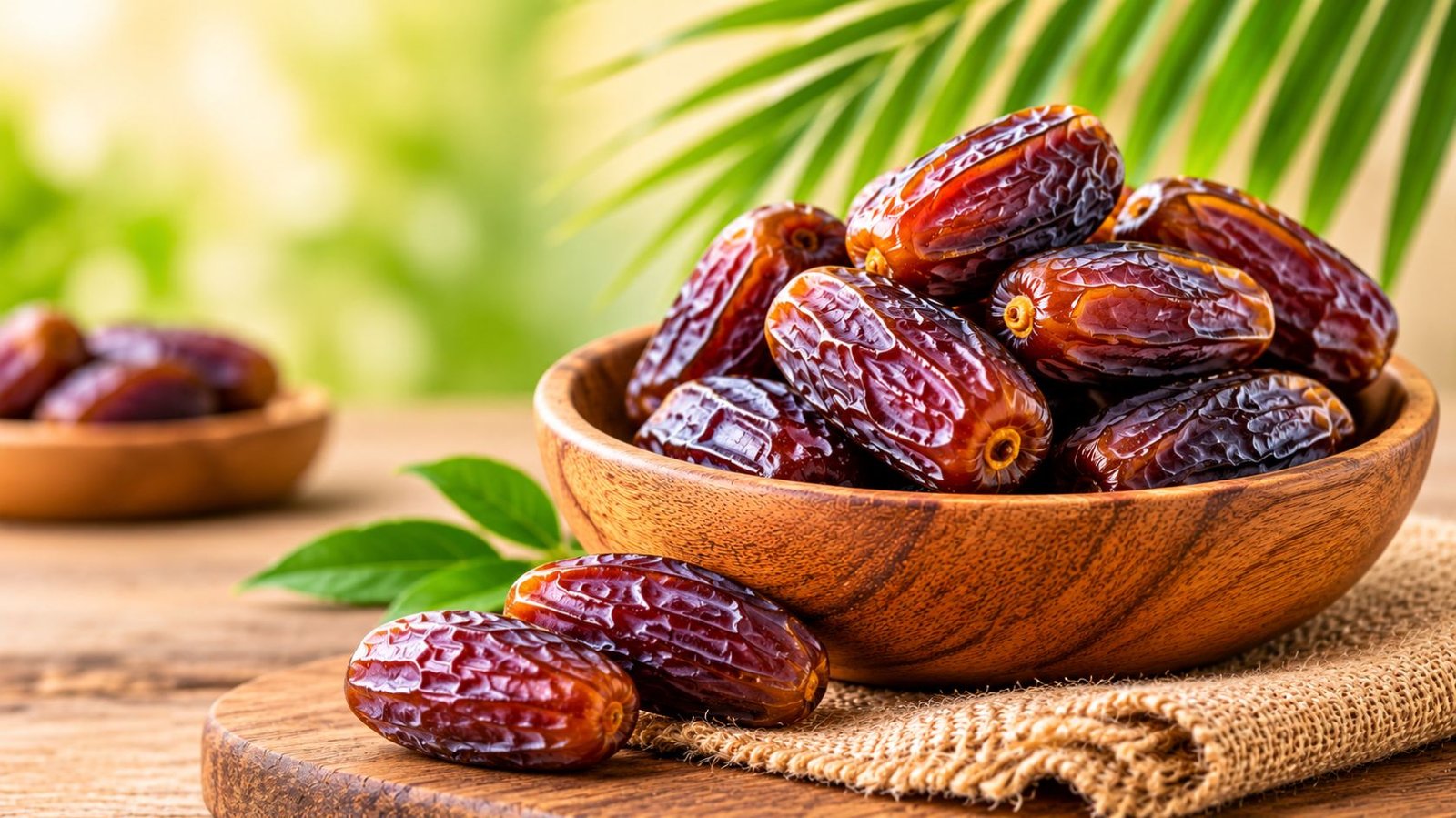
Medjool dates benefits come mainly from their nutrient profile: they are a concentrated source of carbohydrate, fibre, potassium and copper. According to USDA FoodData Central, 100 g of Medjool dates contains 277 kcal, 6.7 g of fibre and 696 mg of potassium, and about two-thirds of the weight is sugar. The evidence for specific health effects is thinner than most benefits lists suggest. A few small studies exist, and none show that Medjool dates treat or prevent a disease. This guide covers the nutrition facts, what the research found, how many to eat, how to use them and how to choose between Medjool sizes.
What Are Medjool Dates?
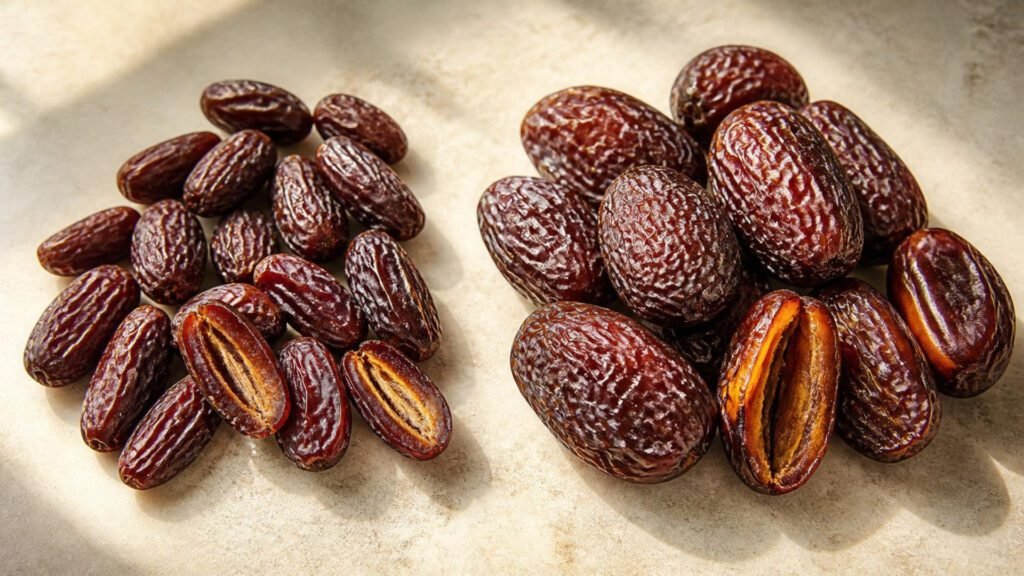
Medjool dates are a large, soft variety of date, the fruit of the date palm (Phoenix dactylifera). In India, dates are commonly called khajoor, and Medjool is one of the premium khajoor varieties sold alongside Ajwa and Kalmi. Medjool dates are very sweet, with a soft, sticky flesh and a thin, wrinkled skin.
The variety probably originated in the Tafilalet region of Morocco. In 1927, USDA plant pathologist Walter Swingle travelled to Morocco while Bayoud disease was destroying Medjool palms there, and he sent 11 healthy offshoots to the United States, according to JSTOR Daily. Commercial Medjool production has since spread to countries including the United States, Israel, Jordan and Mexico.
Medjool Dates Nutrition Facts
One pitted Medjool date provides about 66 kcal, 16 g of sugar and 1.6 g of fibre. The table below uses the USDA FoodData Central entry for Medjool dates (SR Legacy, FDC ID 168191). USDA lists one pitted Medjool date as 24 g, and the per-date column uses that weight.
| Nutrient | Per 100 g | Per date (about 24 g) |
|---|---|---|
| Energy | 277 kcal | about 66 kcal |
| Carbohydrate | 74.97 g | about 18 g |
| Sugars | 66.47 g | about 16 g |
| Dietary fibre | 6.7 g | about 1.6 g |
| Protein | 1.81 g | about 0.4 g |
| Fat | 0.15 g | under 0.1 g |
| Potassium | 696 mg | about 167 mg |
| Magnesium | 54 mg | about 13 mg |
| Calcium | 64 mg | about 15 mg |
| Copper | 0.362 mg | about 0.09 mg |
| Vitamin B6 | 0.249 mg | about 0.06 mg |
| Iron | 0.9 mg | about 0.2 mg |
The table shows both the appeal and the catch. Medjool dates supply quick energy, fibre, potassium and copper, but they are not a low-calorie or low-sugar food, and with about 0.2 mg per date they are not a meaningful source of iron. Real dates vary from the USDA average by farm and size. Jumbo and super jumbo dates weigh more than 24 g, so each one carries more calories than the per-date figure.
What Are the Health Benefits of Medjool Dates?
The benefits of Medjool dates that the evidence supports are nutritional: they provide energy, fibre, potassium and copper in a whole-food form, and they can replace refined sugar in sweet dishes. Claims that Medjool dates lower cholesterol or protect the heart are not supported by human research.
- Quick energy: about 66 kcal and 18 g of carbohydrate per date, useful before exercise or during a long day of travel.
- Fibre: 6.7 g per 100 g, or about 1.6 g per date, contributes to daily fibre intake.
- Potassium: 696 mg per 100 g. Potassium is involved in fluid balance, nerve signalling and muscle function.
- Copper and magnesium: 0.362 mg of copper and 54 mg of magnesium per 100 g. One date supplies about a tenth of the 0.9 mg daily value for copper.
- A whole-food sweetener: date paste sweetens desserts while adding fibre and minerals that table sugar does not contain. It still adds sugar and calories.
What Does Research Show About Medjool Dates?
The main human study on Medjool dates is a pilot study by Rock and colleagues, published in the Journal of Agricultural and Food Chemistry in 2009. Ten healthy adults ate 100 g a day of either Medjool or Hallawi dates for four weeks. Fasting blood glucose and triglycerides did not rise, triglycerides fell by 8% on Medjool and 15% on Hallawi, and total cholesterol and LDL did not change significantly.
The same paper reported that Medjool dates contain phenolic compounds, mainly ferulic and coumaric acid derivatives, which showed antioxidant activity in laboratory tests. Antioxidant activity in a test tube does not prove a health effect in people. With ten participants and no control group, the study cannot show that dates lower triglycerides or protect the heart, and the authors described it as a pilot study.
How Many Medjool Dates Can You Eat a Day?
There is no official daily limit for Medjool dates. A common portion for healthy adults is one to three dates, which adds about 66 to 200 kcal and 16 to 48 g of sugar. The Rock study used 100 g a day, about four dates, in healthy adults, and its results should not be applied to people with diabetes or people managing their weight.
Calories and sugar set the practical limit. Pairing dates with almonds, walnuts or yoghurt adds protein and fat to the portion. If you manage diabetes or take medicine for blood sugar, ask your doctor or dietitian for an amount that fits your plan.
Do Medjool Dates Raise Blood Sugar?
Yes. Medjool dates raise blood sugar because about 66% of their weight is sugar, but dates in general have a lower glycemic index (GI) than many people expect. A 2011 study in Nutrition Journal by Alkaabi and colleagues tested five date varieties grown in the UAE in 13 healthy adults and 10 adults with type 2 diabetes. The mean GI ranged from 46.3 to 55.1 in the healthy group and from 43.8 to 53.0 in the diabetes group, and the authors classified all five as low-GI dates.
Medjool was not one of the five varieties tested, so these figures show the typical range for dates rather than a Medjool value. GI also ignores portion size: four Medjool dates still deliver about 64 g of sugar. If you track your blood sugar, check your own response to a single date first.
How to Eat Medjool Dates
Medjool dates can be eaten on their own, stuffed, chopped into breakfast or blended into drinks and desserts. Their soft flesh makes them easier to mash and blend than firmer varieties. Split each date lengthwise and remove the seed before eating or cooking.
- As a snack: one or two dates on their own or with a handful of nuts.
- Stuffed: split and filled with almonds, walnuts or peanut butter.
- In breakfast: chopped into oats, muesli or yoghurt.
- In drinks: blended into a date milkshake or smoothie.
- In Indian sweets: mashed into a paste to sweeten khajoor laddoo, halwa or kheer in place of some or all of the sugar.
- To break a fast: dates are traditionally eaten to break the daily fast during Ramadan.
Medjool dates keep best in an airtight container away from heat and humidity, and refrigeration helps in hot months. The guide on how to store dry fruits compares fridge, pantry and freezer storage.
Which Medjool Date Size Should You Buy?
Medjool dates are sold by size grade, and the grade changes the size and price of each date, not its nutrition per gram. Grade names such as medium, jumbo and super jumbo are set by growers and packers, and the size range behind each name can differ between suppliers. Oasis Dry Fruits sells three Medjool grades in 250 g and 500 g packs.
The table below compares the three grades by price and typical use. Prices are as listed on the Oasis Dry Fruits website on 22 November 2026.
| Grade | 250 g | 500 g | Per 100 g (500 g pack) | Suited to |
|---|---|---|---|---|
| Medium Medjool dates | ₹510 | ₹1,000 | ₹200 | Daily snacking, smoothies, cooking |
| Jumbo Medjool dates | ₹565 | ₹1,100 | ₹220 | Snacking, stuffing with nuts |
| Super jumbo Medjool dates | ₹630 | ₹1,235 | ₹247 | Gifting, serving guests |
Super jumbo costs about 24% more per gram than medium in the 500 g pack. Because nutrition per gram is the same across grades, the extra cost pays for larger dates and presentation. For everyday eating and recipes where the dates are mashed or blended, the medium grade gives the same nutrition for less. For a wider comparison that includes Ajwa and other varieties, see the guide to buying the best dates online in India.
How Do Medjool Dates Compare With Kalmi Dates?
Kalmi is the trade name Indian sellers use for Safawi dates, a Saudi Arabian variety. Kalmi dates are smaller, darker and chewier than Medjool and cost less: on the Oasis Dry Fruits website, a 250 g pack of Kalmi starts at ₹320, compared with ₹510 for medium Medjool. The Kalmi vs Medjool comparison covers taste, texture, shelf life and price side by side.
Frequently Asked Questions About Medjool Dates
How many calories are in one Medjool date?
One pitted Medjool date of about 24 g has roughly 66 kcal, based on the USDA figure of 277 kcal per 100 g. Jumbo and super jumbo dates weigh more than 24 g, so each one has proportionally more calories. Weighing a few dates from your pack gives the most accurate figure.
Are Medjool dates the same as khajoor?
Medjool is one type of khajoor. Khajoor is the Hindi and Urdu word for dates in general, and it covers many varieties, including Medjool, Ajwa, Kalmi, Mabroom and Sukkari. Dried, hard dates are usually sold separately as chuhara.
Are Medjool dates fresh or dried?
Medjool dates are a soft, semi-dry date. They are harvested at the tamar stage, when the fruit has fully ripened and partly dried on the palm, and USDA data shows about 21 g of water per 100 g. They are neither fresh like the crunchy yellow or red dates sold briefly in season, nor hard like chuhara.
Are Medjool dates good for weight gain?
Medjool dates are energy-dense, so they can help add calories to a diet. Four dates provide about 265 kcal, mostly from sugar, with very little protein or fat. For weight gain, dates are usually paired with protein-rich foods such as nuts, milk or yoghurt rather than eaten as the main source of extra calories.
Do Medjool dates contain iron?
Medjool dates contain only small amounts of iron. USDA data lists 0.9 mg per 100 g, or about 0.2 mg per date, which is a small fraction of daily needs. Legumes, leafy greens and fortified cereals are much richer sources of iron.
Can I eat Medjool dates every day?
Most healthy adults can eat Medjool dates every day in portions of one to three dates. Four or more dates a day adds about 265 kcal or more, so count them as part of your daily intake. People with diabetes, people with kidney disease and people taking medicines that raise potassium levels should ask a doctor how many dates are suitable.